
Beef Rice Noodles
Stir-fried rice noodles with tenderised beef and Asian greens
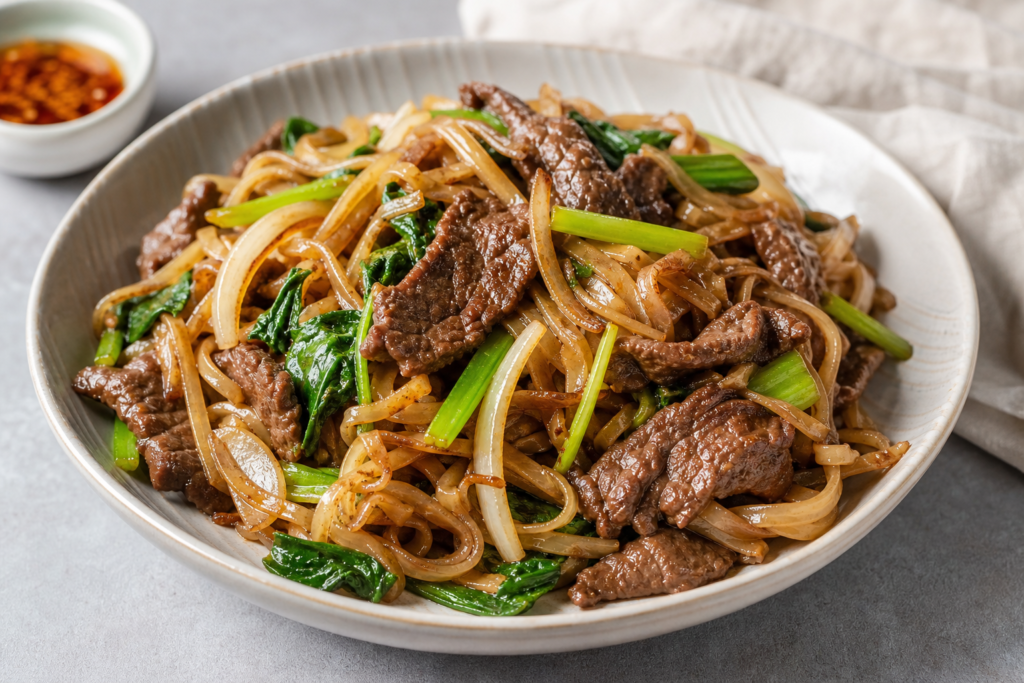
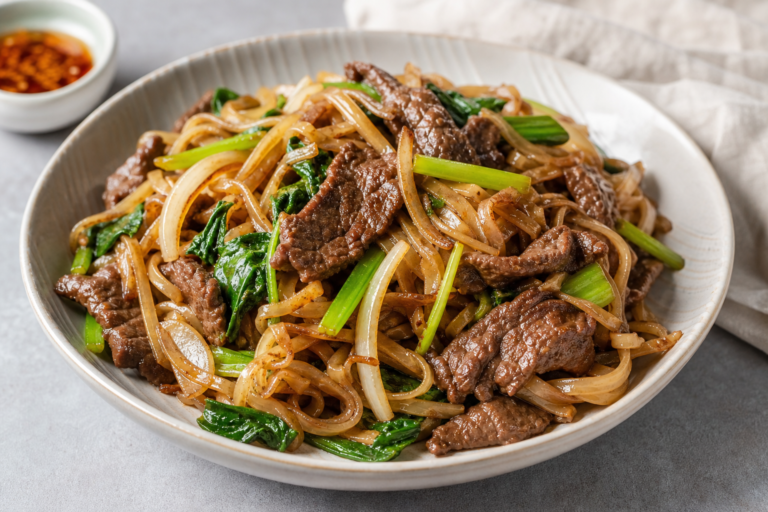
This stir fry uses dried rice noodle sticks and thinly sliced beef that’s tenderised using a small amount of baking soda so the meat stays soft during cooking. Use any width of dried rice noodles (Pad Thai thickness was used here); the amount needed will vary by thickness. The sauce is built around oyster sauce with light and dark soy and a little sugar. Prepare the noodles just before cooking and follow a fast, high-heat stir-fry sequence so everything finishes quickly.
About the beef
A light sprinkle of baking soda (1/2 teaspoon) tossed with thin beef strips is used to tenderise them (velveting). Rump steak (top sirloin) is recommended, though rump roast, rump cap, sirloin cap, top side (top round), flank and other stir-fry cuts are suitable. Slow-cooking cuts can be used but require longer tenderising.
Noodles and greens
Dried rice noodle sticks of any width can be used; Pad Thai thickness (~3 mm / 1/8″ when dried) was used in this recipe. Leafy Asian greens such as bok choy, choy sum, gai lan (Chinese broccoli) or spinach are suitable; trim ends and cut into ~5 cm / 2″ pieces, separating stems from leaves so they cook in stages.
Sauce highlights
The sauce combines oyster sauce with light and dark soy sauce, sugar and white pepper. Light soy adds salt without heavy colour; dark soy adds colour and deeper soy flavour. Quantities for the sauce are from the source recipe but are not listed here.
Timing notes
Tenderise beef for 20 minutes. Typical soaking for dried rice noodles is about 10 minutes in boiling water per packet directions. In the pan: cook onion ~30 seconds; toss greens’ stems ~1 minute; toss noodles with sauce 1½–2 minutes until coated and greens wilted.
What Makes This Recipe Work
This beef rice noodle stir-fry relies on two simple techniques to deliver tender meat and clean-textured noodles: a short ‘velveting’ with baking soda to keep thin beef strips soft during high-heat cooking, and preparing dried rice noodles just before they hit the wok so they don’t break or turn gluey. The sauce is built around oyster sauce with both light and dark soy to balance seasoning and colour, while the quick stir-fry sequence — onion, beef, garlic, stems, leaves, noodles and sauce — ensures everything finishes at the same moment.
Ingredient Notes
Beef: Thinly sliced rump or top sirloin is recommended for quick stir-frying. Other suitable cuts include rump roast, rump cap, sirloin cap, top side (top round) and flank. If you choose a slow‑cooking cut, be aware it will need longer tenderising.
Noodles: Dried rice noodle sticks can be used in any width; this recipe used Pad Thai thickness (~3 mm / 1/8″ when dried). The amount you need will change with noodle width, so check packet guidance for portioning.
Greens: Leafy Asian greens such as bok choy, choy sum, gai lan (Chinese broccoli) or spinach all work. Trim and cut into roughly 5 cm (2″) pieces and separate stems from leaves so they can be added at different times in the pan.
Sauce: The flavour comes from oyster sauce plus light and dark soy, with a little sugar and white pepper. Light soy supplies salt without darkening the dish; dark soy deepens colour and gives a stronger soy flavour.
How to Get the Best Result
Tenderising: Sprinkle 1/2 teaspoon baking soda over the thinly sliced beef and rub to coat and separate the pieces. Leave for 20 minutes — you’ll notice the meat turn a brighter red. After 20 minutes, rinse the beef in a colander to remove the baking soda, shake off excess water and pat with paper towel so it isn’t soaking wet. Toss the beef with a splash of light soy for seasoning; it does not require additional marinating time.
Noodles: Soak dried rice noodles only when you are ready to cook. Follow the packet directions — many packets call for about 10 minutes in boiling water — then drain and rinse under running water to remove excess starch. Rinsing helps prevent the noodles becoming gluey and reduces breakage.
Stir-fry sequence and timing: Use high heat and a roomy wok or large skillet. Start with the chopped onion for about 30 seconds, then add the beef and stir-fry until most of the red has gone brown. Add the garlic and cook until the beef is no longer red. Toss in the greens’ stems for roughly 1 minute, then add the leafy parts, the drained noodles and the sauce. Work quickly: toss and de-tangle the noodles for about 1½–2 minutes until the sauce has coated the noodles, there’s no pooling sauce in the pan and the leaves have wilted. Serve immediately.
Serving Ideas
Serve straight from the wok so the noodles retain their texture and the greens stay bright. The combination of oyster sauce and two soy sauces gives the dish a rich savoury backbone — adjust light and dark soy to suit how salty or dark you like the final plate. A simple garnish of fresh green onions or a squeeze of citrus is optional, but not required by the recipe.
Storage / Make-Ahead
Prepare only the components that won’t compromise texture if held: you can slice the beef and mix the sauce components in advance, but avoid soaking the rice noodles until you are ready to cook. The beef’s tenderising step should be kept to the recommended 20 minutes — leaving it for hours longer can make the texture overly soft. The cooked dish is intended to be served immediately for best texture.
More recipes to explore


More recipe ideas
Beef Rice Noodles
Ingredients
Instructions
- Tenderise the beef: sprinkle 1/2 teaspoon baking soda over the thinly sliced beef and use your fingertips to coat and separate the pieces. Leave for 20 minutes — the beef will turn a bright red.
- Rinse the beef in a colander to remove the baking soda. Shake off excess water and pat with a paper towel so it isn’t soaking wet.
- Put the beef in a bowl, add a splash of soy sauce to season, mix and set aside. It does not need marinating time.
- Prepare the sauce by combining oyster sauce, light soy, dark soy, sugar and white pepper (quantities per your source recipe or taste).
- Soak the dried rice noodles just before cooking according to the packet directions (packet directions commonly call for soaking in boiling water for about 10 minutes). Drain, then rinse under running water to remove excess starch.
- Heat oil over high heat in a wok or large deep skillet. Add the chopped onion and cook for about 30 seconds.
- Add the beef and stir-fry. When most of the red has turned brown, add the garlic and cook until the beef is no longer red.
- Add the stems of the Asian greens and toss for about 1 minute.
- Add the leafy parts of the greens, then the drained noodles (the noodles help weigh down the greens), then the sauce.
- Toss and de-tangle the noodles, stirring for 1½–2 minutes until the sauce has coated the noodles, there is no sauce pooling in the pan and the leafy greens have wilted.
- Serve immediately.
Estimated nutrition per serving
ESTIMATE not provided — ingredient quantities and final yield are not specified in the supplied information, so calories, protein, carbohydrates, fat and fiber cannot be reasonably estimated.
Helpful Tips
- Soak dried rice noodles only when you’re ready to cook; soaked noodles left sitting are more prone to breaking.
- After soaking, rinse noodles under running water to remove excess starch and prevent them becoming gluey when cooked.
- When removing baking soda from the beef, rinse in a colander, shake off excess water and pat — the meat doesn’t need to be completely dry, just not soaking.
- Keep the beef tenderising to about 20 minutes; if left much longer it can become overly soft.
- Separate greens’ stems and leaves so stems go in earlier (about 1 minute) and leaves wilt quickly after the noodles and sauce go in.
- Use high heat and a roomy pan so you can toss and de-tangle the noodles for 1½–2 minutes until evenly coated and no sauce is pooling.
Frequently Asked Questions
Why use baking soda on the beef?
A light sprinkle (1/2 teaspoon) on thinly sliced beef tenderises it (velveting), helping the meat stay soft during quick, high-heat stir-frying.
How long should the beef be left with baking soda?
Leave the baking soda on the beef for 20 minutes. After that, rinse it off in a colander and remove excess water before cooking.
When should I soak the rice noodles?
Soak the dried rice noodles just before cooking according to the packet directions — many packets call for about 10 minutes in boiling water — then drain and rinse under running water.
Can I use any rice noodle width?
Yes. Any width of dried rice noodles can be used; Pad Thai thickness (~3 mm / 1/8") was used here, but adjust the amount you cook to the noodle width.
Do I need to marinate the beef after tenderising?
No. After rinsing and patting, the beef is seasoned with a splash of light soy and does not require additional marinating time before stir-frying.
What’s the difference between light and dark soy in this sauce?
Light soy provides saltiness without heavy colouring, while dark soy adds deeper colour and a stronger soy flavour; use both to balance seasoning and appearance.
You may also like

Satay chicken legs with peanut sauce
Drumsticks coated in a satay-style marinade, oven-baked until golden and served with a thinner peanut…
Read more →
Spinach and Ricotta Cannelloni
A crowd-pleasing bake of spinach and ricotta stuffed into dry cannelloni tubes, finished with a…
Read more →
Sheet Pan Jambalaya
A one-pan, riceless take on jambalaya: kielbasa, peppers, onion, shrimp and cauliflower rice tossed with…
Read more →This page may contain affiliate links. We may earn a commission at no extra cost to you.