
Chilli Lime Fish
Pan-seared white fish in a sticky, spicy lime sauce inspired by Thai street food
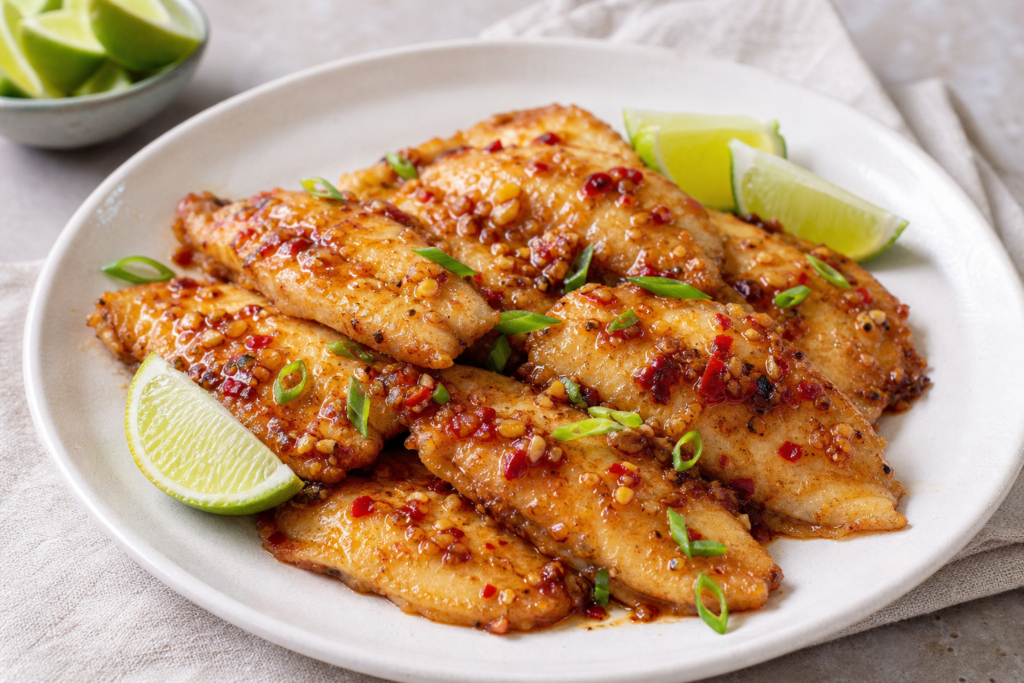
A streamlined home-cook version of a Thai three-flavour fish — sweet, savoury and sour — using pantry-friendly ingredients and pan-frying instead of deep-frying for a fast weeknight dish.
What you need
Thin-ish white fish fillets (cut into pieces about 5 cm / 2″), garlic and ginger finely minced, lime, sriracha, red pepper flakes, light soy sauce (or fish sauce), brown sugar, sesame oil, rice flour (or plain/all-purpose flour or cornflour/cornstarch), neutral oil for frying, optional coriander/cilantro and fresh chilli for garnish.
Serving suggestions
Serve over steamed rice (jasmine recommended), plain white or brown rice, or cauliflower rice for a low-carb option. Vermicelli noodles also work as a no-cook base. Steamed greens with an Asian sesame dressing make a good side.
What makes this recipe work
This Chilli Lime Fish is a streamlined, pantry-friendly take on a Thai three-flavour fish: sweet, savoury and sour. Pan-frying thin pieces of white fish gives a quick golden exterior without deep-frying, while a syrupy chilli–lime sauce clings to the fish for big flavour in minimal time. Finely minced garlic and ginger—sautéed briefly in sesame oil—release aromatic punch without overwhelming the delicate fish, and a final squeeze of lime keeps the dish bright.
Ingredient notes
- White fish: Choose thinner fillets or split very thick fillets horizontally so pieces finish quickly and evenly. Aim for fillets close to the suggested thickness to match the cooking times.
- Flour for dusting: Rice flour is recommended for a light coating, but plain/all-purpose flour or cornflour/cornstarch can be used as substitutes—the coating helps the sauce adhere and promotes a golden surface when pan-fried.
- Sauce components: The balance comes from sriracha, light soy sauce (or fish sauce if you prefer), brown sugar and lime juice. Add the lime at the end so the sour note stays bright.
- Frying vs finishing oil: Use a neutral oil for the initial pan-fry to get a clean, golden sear. Sesame oil is added later to sauté the aromatics and introduce an toasty note to the sauce.
- Garnish options: Fresh coriander/cilantro and fresh chilli are optional but lift the finished dish.
How to get the best result
- Use thinner pieces of fish to increase surface area and reduce cooking time. If fillets are thick, split them horizontally into thinner pieces so they cook evenly.
- Season the fish with salt, dust lightly with your chosen flour and shake off any excess before frying to avoid an overly floury crust.
- Follow the recommended pan-fry times as a guide: for thin fillets (~1 cm) cook about 1½ minutes per side; for fillets around 1.5–1.75 cm thick, cook about 2 minutes per side or until the internal temperature reaches 55°C / 130°F.
- After removing the fish, reduce the heat to medium before adding sesame oil and the aromatics. Sauté the minced garlic, ginger and red pepper flakes for roughly 20 seconds—stop once the garlic starts to turn golden so it doesn’t burn.
- Add the sauce ingredients (except lime) and simmer until the mixture becomes syrupy, about 2 minutes. Stir in the lime juice just before returning the fish to the pan so the citrus remains fresh and lively.
- When you return the fish to the pan, turn each piece gently to coat in the sauce. The instructions note the fish will warm through in the sauce—use that to avoid overcooking.
Serving ideas
Serve immediately over steamed rice—jasmine is recommended for its fragrance—or plain white or brown rice. For a lower-carb base, cauliflower rice works well. Vermicelli noodles also make a simple, no-cook bed for the saucy fish. On the side, steamed greens dressed with an Asian sesame dressing complement the sweet-savoury-sour profile and add a bright, textural contrast.
Storage / make-ahead
This preparation is designed for speed and is best served straight from the pan so the sauce is glossy and the fish is warm. The method notes that the fish will warm through in the sauce when returned to the pan, which is useful if you need to bring everything back up to temperature before serving.
Why the small technique choices matter
Pan-frying instead of deep-frying makes this a fast weeknight option without sacrificing that golden exterior or the sauce’s ability to cling. Finely mincing garlic and ginger (with a knife rather than a press or grater) prevents a wet paste that can burn during the very short sauté step. Dusting the fish lightly with flour creates a surface for the sauce to adhere to and helps achieve that desirable glossy, syrupy coating.
Yield: 2 servings • Prep: 10 minutes • Cook: 8 minutes • Total: 18 minutes
More recipes to explore


More recipe ideas
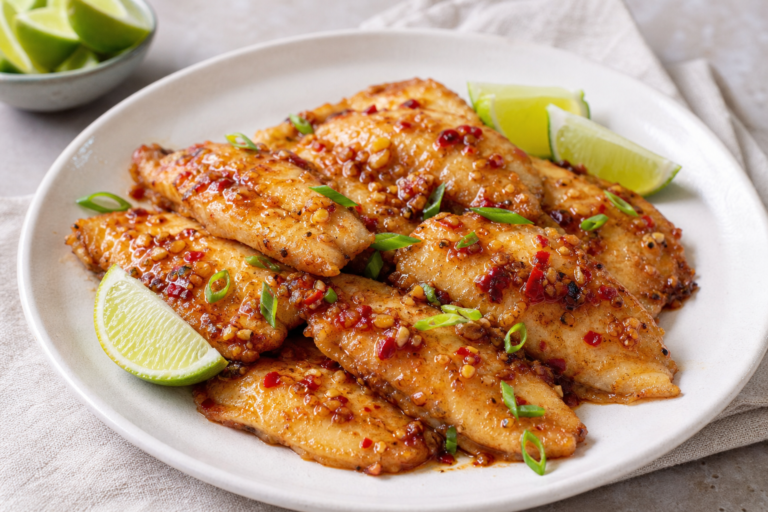
Chilli Lime Fish
Ingredients
Instructions
- Cut fish into pieces about 5 cm (2") each. Aim for fillets around 1 cm / 0.4" thick; if fillets are 2.5 cm / 1" or thicker, split them horizontally into thinner pieces.
- Season the fish pieces with salt, then dust lightly with rice flour (or substitute). Shake off excess flour.
- Heat neutral oil in a non-stick pan. Pan-fry the fish until golden on both sides: for thin fillets (~1 cm) cook about 1½ minutes per side; for fillets ~1.5–1.75 cm thick, cook about 2 minutes per side or until internal temperature reaches 55°C / 130°F.
- Transfer the cooked fish to a plate and set aside.
- Reduce heat to medium. Add sesame oil to the same pan, then sauté the minced garlic, ginger and red pepper flakes for about 20 seconds, until the garlic turns golden.
- Add sriracha, light soy sauce (or fish sauce), brown sugar and other sauce components (all except the lime) and simmer for about 2 minutes, until the sauce becomes syrupy.
- Stir in the lime juice to finish, then return the fish to the pan and turn to coat each piece in the sauce. The fish will warm through in the sauce.
- Serve immediately over rice or your chosen base, garnished with coriander/cilantro and fresh chilli if using.
Estimated nutrition per serving
ESTIMATE: Insufficient information to provide a meaningful nutrition estimate per serving based on the supplied ingredients and yield.
Helpful Tips
- Use thinner pieces of fish or split thick fillets horizontally so they cook quickly and evenly.
- Season and dust fish with flour, then shake off excess—too much flour prevents a light crust and can make the sauce gummy.
- Finely mince garlic and ginger with a knife instead of using a press or grater to avoid a wet paste that can burn in the pan.
- Reduce heat to medium before sautéing aromatics; cook the garlic and ginger for about 20 seconds, stopping when the garlic turns golden.
- Simmer the sauce ingredients (except lime) until syrupy—about 2 minutes—then stir in lime juice at the end to preserve brightness.
- Return the fish to the pan and turn gently so each piece is coated; the fish will warm through in the sauce without additional long cooking.
Frequently Asked Questions
Can I use a different flour for dusting the fish?
Yes. Rice flour is recommended, but plain/all-purpose flour or cornflour/cornstarch are acceptable substitutes for the dusting step.
Can I use fish sauce instead of light soy sauce?
Yes. Light soy sauce is suggested, and fish sauce is listed as an optional alternative for the savory element of the sauce.
How do I know when the fish is done?
For thin fillets (~1 cm) follow the guideline of about 1½ minutes per side; for fillets around 1.5–1.75 cm, cook about 2 minutes per side or until the internal temperature reaches 55°C / 130°F.
What if my fillets are too thick?
If fillets are thicker than the suggested thickness, split them horizontally into thinner pieces so they cook evenly and match the stated cooking times.
Is this meant to be served immediately?
Yes. The recipe is intended to be served right away so the sauce stays glossy and the fish is warm; when reheating, the fish is warmed through in the sauce.
You may also like
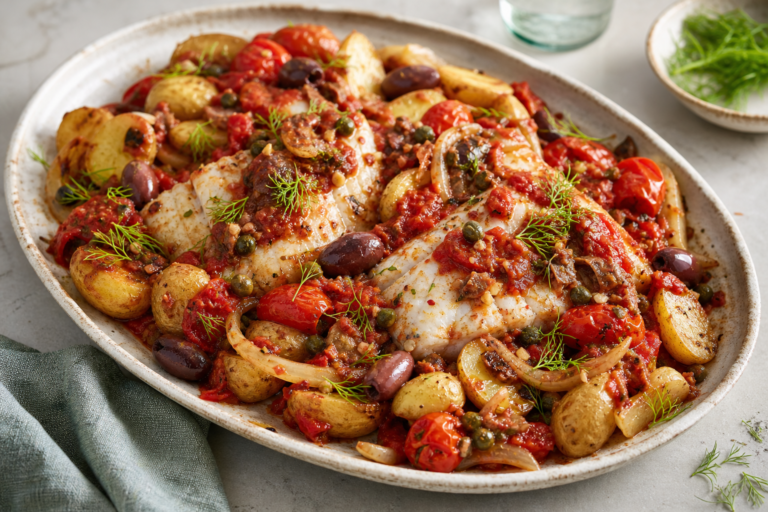
Puttanesca fish tray bake
A tray bake that layers puttanesca flavours—tomato, olives, capers and anchovies—over roasted potatoes, fennel and…
Read more →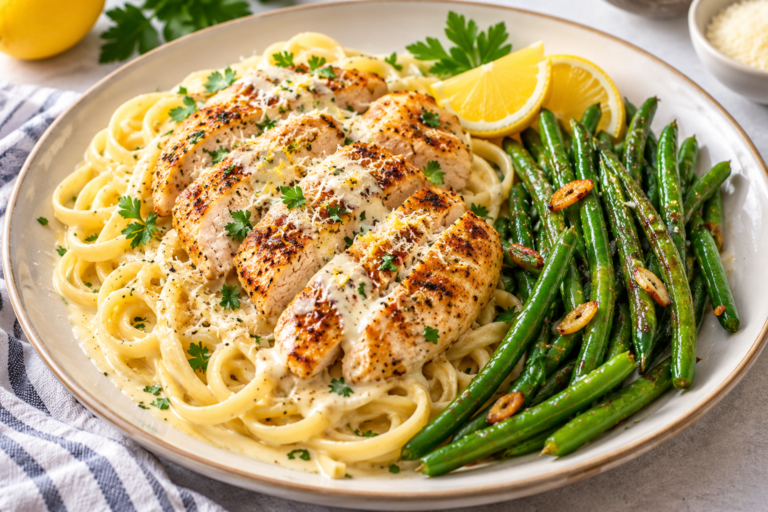
Creamy Lemon-Garlic Chicken Linguine with Parmesan & Sautéed Green Beans
For this tangy twist on a classic pasta dish, pan-seared chicken cutlets top silky linguine…
Read more →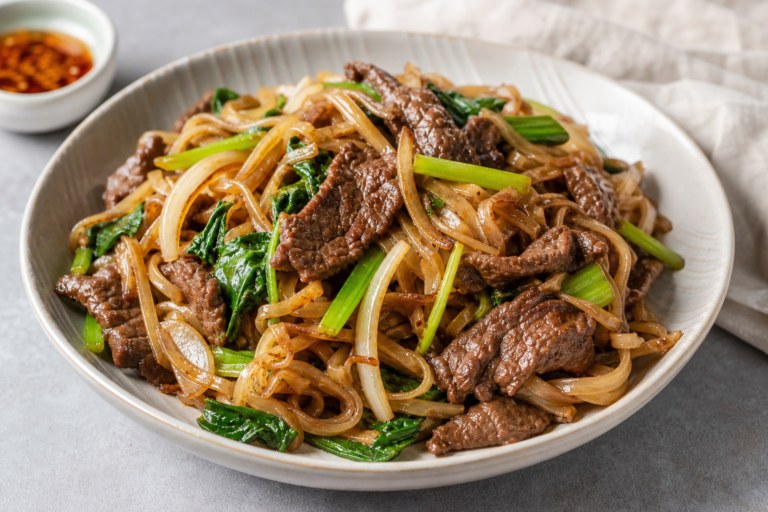
Beef Rice Noodles
A quick rice noodle stir fry featuring thinly sliced beef tenderised with baking soda, dried…
Read more →
Satay chicken legs with peanut sauce
Drumsticks coated in a satay-style marinade, oven-baked until golden and served with a thinner peanut…
Read more →This page may contain affiliate links. We may earn a commission at no extra cost to you.