
One-pan Korean-style Beef Noodles
Creamy, glossy Korean-inspired beef noodles cooked in a single pan — ready in 20 minutes.
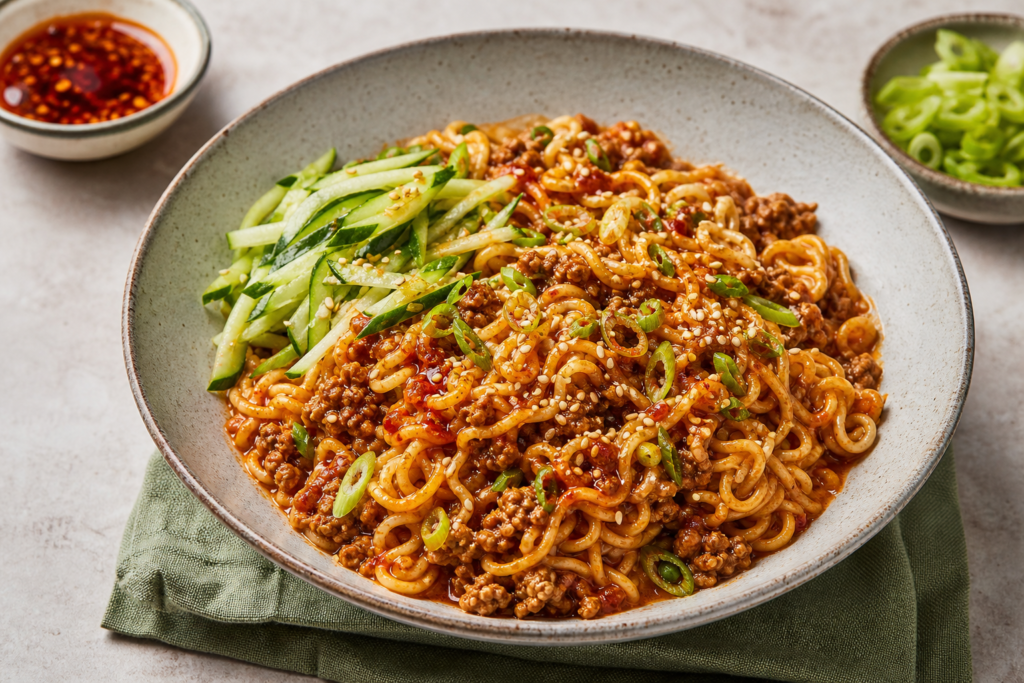
This one-pan noodle dish brings Korean-style flavours to a fast weeknight meal. Ground beef simmers with gochujang, soy, garlic and ginger in a creamy sauce so the instant ramen cooks directly in the pan — less washing up and a glossy, saucy finish. Top with fresh cucumber, spring onion and sesame seeds, and let everyone add chilli oil to taste.
Toppings
Sliced cucumber, spring onion (scallion), sesame seeds, bean sprouts, kimchi, soft-boiled egg, crispy fried shallots and chilli oil are all suggested options. Serve in a wide bowl and offer chilli oil on the side so diners control the heat.
Vegetables
This recipe is flexible — add 1–2 cups total of vegetables such as shredded wombok (napa) cabbage, julienned carrot, bean sprouts, thinly sliced mushrooms, sliced onion, small broccoli florets, shredded Chinese broccoli (gai lan) or snow peas. Add firmer vegetables with the beef and softer vegetables during the final few minutes of cooking.
Quick method overview
Brown the minced beef, stir in aromatics and sauces (gochujang, soy, garlic, ginger) and coconut milk, then add instant ramen straight to the pan and cook in the sauce until the noodles are glossy and coated. Toss with tongs so the sauce clings to every strand.
What Makes This Recipe Work
This one‑pan noodle dinner keeps things simple while delivering bold Korean‑style flavors. Ground beef provides a quick, savory base; gochujang and soy add depth and a touch of heat; and coconut milk gives the sauce a silky, glossy finish that clings to instant ramen. Cooking the noodles directly in the pan with the sauce concentrates flavor and cuts down on pots to wash — a true weeknight shortcut that still feels special when finished with crunchy, fresh toppings.
Ingredient Notes
Key components in this version are all pantry‑friendly and designed for speed. Instant ramen (the curly packet style) is recommended because it cooks quickly in the sauce and develops that glossy, saucy coating. The seasoning sachets that come with instant ramen should be discarded or saved for another use — they’re not needed here. Gochujang is the primary spicy, fermented element; if you don’t have it, there’s a simple swap using sriracha and a little honey (and miso if you have it) included in the recipe notes. Coconut milk thins the heat and gives the sauce body so every strand of noodle is richly coated. Fresh toppers such as cucumber, spring onion and sesame seeds contrast the cooked elements with crunch and brightness.
How to Get the Best Result
Start by properly browning the minced beef so you build savory caramelized flavor before adding the aromatics and sauces. Once garlic, ginger, gochujang and soy are in, add the coconut milk and a splash of water to form the cooking liquid — this is the medium that will cook the noodles and turn glossy as you toss them.
When you add the instant ramen directly to the pan, use tongs to separate and toss the noodles so they don’t clump and so the sauce evenly coats every strand. If you plan to include vegetables, think about their texture: add firmer vegetables (for example, broccoli florets, shredded napa cabbage or sliced onion) with the beef so they have time to soften; add more delicate items like bean sprouts or shredded Chinese broccoli in the final few minutes so they stay crisp‑tender and bright.
Adjust the sauce consistency as you go. If the noodles look too dry, add 2 tablespoons of water at a time until the sauce loosens. If the sauce is too thin, continue cooking uncovered for a few minutes so it reduces and thickens, letting the sauce cling to the noodles.
Serving Ideas
Serve in a wide bowl so the glossy sauce and toppings are visible — this makes the dish look more inviting and lets diners customise their bites. Suggested toppings include sliced cucumber, spring onion (scallion) and sesame seeds for immediate crunch and freshness. Other great options listed in the recipe card are bean sprouts, kimchi, a soft‑boiled egg, or crispy fried shallots. Offer chilli oil on the side so each person can control the heat to taste.
Storage / Make‑Ahead
The recipe card doesn’t include specific storage or make‑ahead instructions. Because the method centers on quick cooking and saucing the noodles directly in the pan, this dish is best enjoyed immediately for peak texture — the noodles are at their glossiest and the toppings remain crisp. If you need to prepare elements ahead, consider prepping toppings (sliced cucumber, chopped spring onion, sesame seeds, or cooked eggs) in advance so assembly after cooking is fast.
Why these small steps matter
Separating the noodle strands while they cook and controlling when you add vegetables are the two simple moves that keep this one‑pan recipe from becoming a soggy, clumped mess. Likewise, having a tasting mentality — adding small amounts of water or reducing the sauce further — lets you dial in the perfect glossy coating without diluting flavor.
Total time listed in the recipe card is 20 minutes, making this a solid option for busy weeknights when you want something fast, flavorful and fuss‑free.
More recipes to explore


More recipe ideas
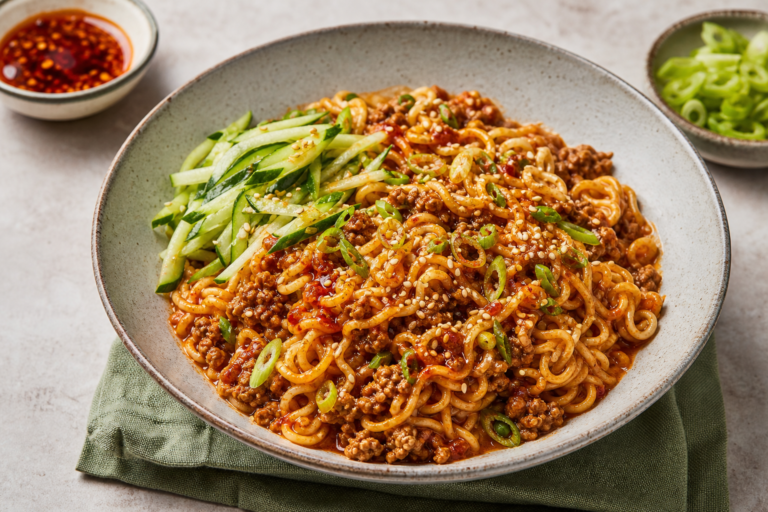
One-pan Korean-style Beef Noodles
Ingredients
Instructions
- Heat a large pan and brown the minced beef until mostly cooked.
- Add garlic, ginger and the sauces (including gochujang and soy) plus coconut milk and some water to create a cooking sauce.
- Add instant ramen noodles directly to the pan and cook in the sauce, using tongs to toss and separate the noodles so they become glossy and evenly coated.
- If adding vegetables, add firmer vegetables with the beef and add softer vegetables during the final few minutes of cooking so everything finishes at the same time.
- Adjust the sauce consistency as needed: if the noodles seem dry, add 2 tablespoons of water at a time until loosened; if the sauce is too thin, continue cooking uncovered until it thickens and coats the noodles.
- Serve in wide bowls and top with cucumber, spring onion, sesame seeds and any other preferred toppings. Offer chilli oil on the side.
Estimated nutrition per serving
An accurate nutrition estimate cannot be provided because the recipe card does not specify ingredient amounts or the yield. Without quantities for beef, coconut milk, noodles and toppings, calories and macronutrients cannot be reasonably estimated.
Helpful Tips
- Use instant curly‑style ramen for best texture; discard the seasoning sachets or save them for another use.
- If you swap in other noodle types (fresh egg noodles, rice noodles, etc.), cook them separately and reduce the water in the recipe to 125 ml (½ cup) before combining with the sauce.
- Add firmer vegetables (broccoli, shredded cabbage, sliced onion) with the beef so they soften, and add delicate vegetables (bean sprouts, shredded gai lan) in the final few minutes.
- If noodles seem dry, add 2 tablespoons of water at a time until loosened; if the sauce is too thin, cook uncovered a few minutes to reduce and thicken.
- If you don’t have gochujang, use 1 tablespoon sriracha + 1 teaspoon honey (add 1 teaspoon miso if you have it) and start with less for children or milder palates.
- Serve in a wide bowl and offer chilli oil on the side so diners can control the heat; finish with cucumber, spring onion and sesame seeds for crunch.
Frequently Asked Questions
Can I use a different noodle than instant ramen?
Yes. Cook other noodles separately according to package instructions and reduce the water in the recipe to 125 ml (½ cup) before mixing with the sauce.
Should I use the seasoning packets that come with instant ramen?
No. The recipe calls for discarding the seasoning sachets or saving them for another use; they aren’t needed for this dish.
When should I add vegetables so everything finishes at the same time?
Add firmer vegetables with the beef so they have time to soften, and add softer vegetables during the final few minutes of cooking so they stay crisp‑tender.
How do I fix sauce that’s too thick or too thin?
If it’s too dry, add 2 tablespoons of water at a time until loosened. If it’s too thin, continue cooking uncovered until the sauce reduces and thickens to coat the noodles.
What can I use instead of gochujang?
The recipe suggests substituting 1 tablespoon sriracha + 1 teaspoon honey; add 1 teaspoon miso if you have it and use less at first for a milder result.
How should I serve the dish?
Serve in a wide bowl so the sauce and toppings are visible. Top with cucumber, spring onion and sesame seeds, and offer chilli oil on the side for extra heat.
You may also like
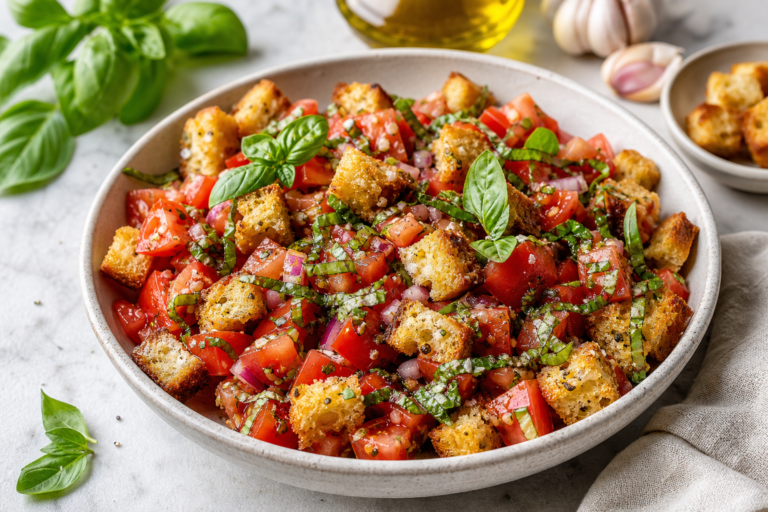
Bruschetta Salad
A quick, flavour-forward tomato salad topped with crispy garlic–parmesan croutons that soak up the juicy…
Read more →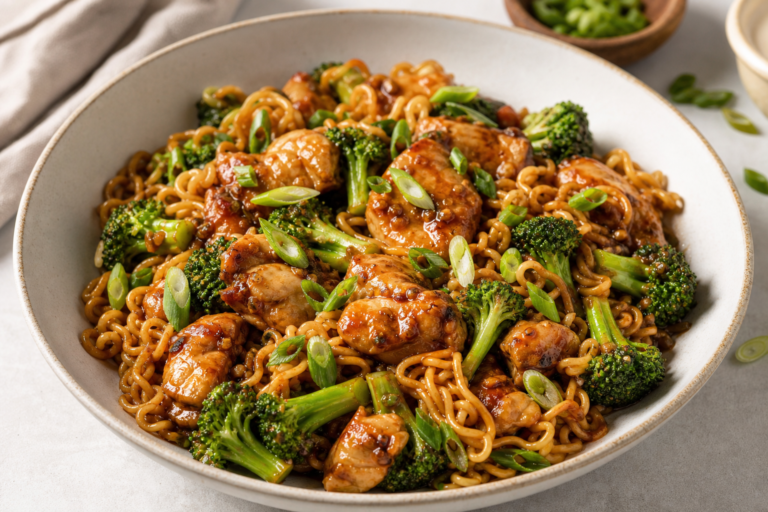
One-pan Chicken and Broccoli Ramen Noodles
A quick one-pan stir-fry where chicken, broccoli and instant ramen finish together in a glossy,…
Read more →
Air Fryer Sticky Pork Belly Bites
Pork belly rashers are trimmed, cut into bite-sized pieces, coated in a honey-and-hoisin marinade and…
Read more →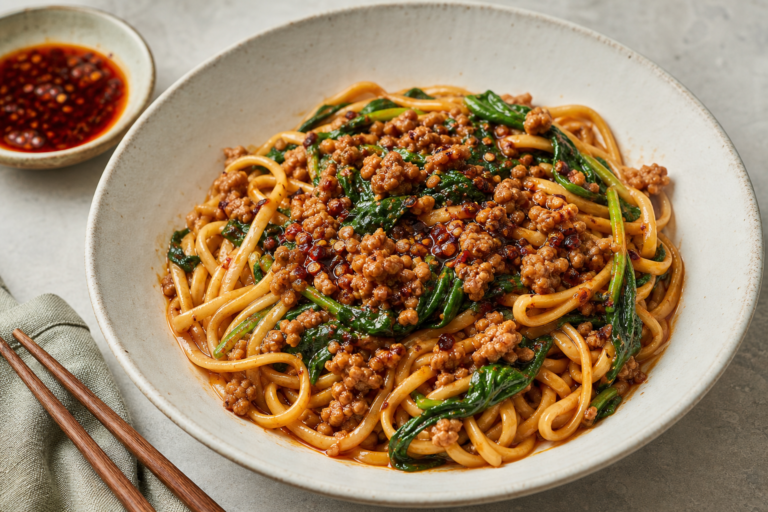
Cheat’s Dan Dan Noodles
An easy, supermarket-friendly take on dan dan noodles: minced (ground) pork, baby spinach and thick…
Read more →This page may contain affiliate links. We may earn a commission at no extra cost to you.