
Taiwanese Three Cup Chicken
Quick braised chicken in a garlicky, ginger-forward soy sauce
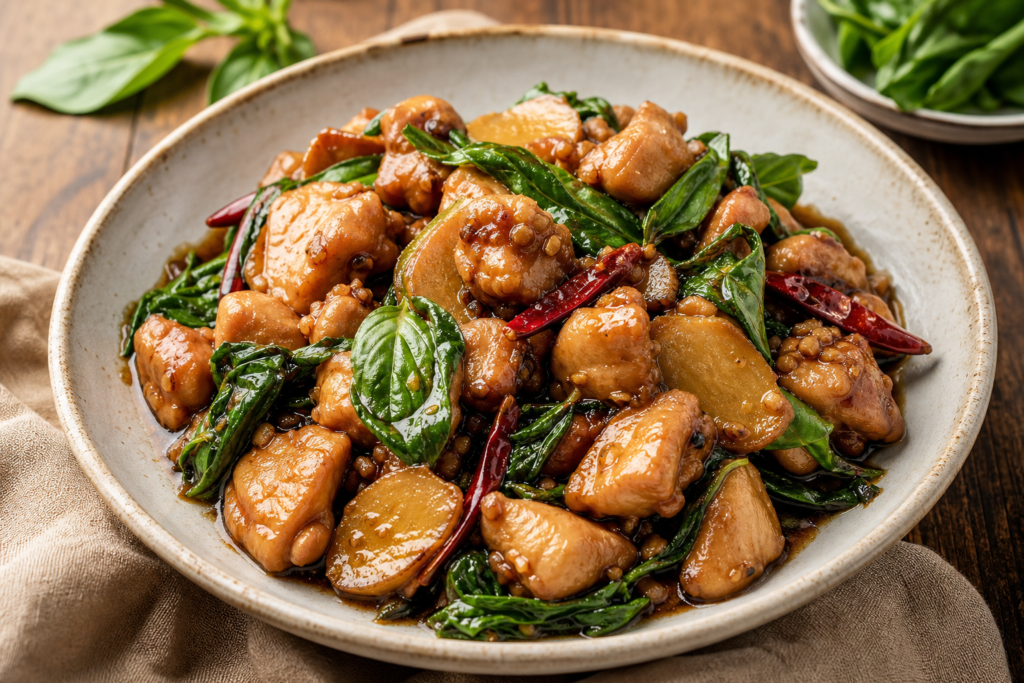
This version of Three Cup Chicken (San Bei Ji) cooks quickly and concentrates bold garlic and ginger flavors into a glossy, syrupy sauce that clings to the chicken. It’s designed for a fast weeknight meal served over plenty of rice.
About this recipe
The chicken is seared briefly, then simmered in a reduced sauce until the liquid becomes a thin syrup that coats each piece. Toasted sesame oil and Thai basil are stirred in at the end for aroma and freshness.
Serving suggestion
Serve with steamed rice so the sauce and seasoned chicken can be spooned over each portion. Fresh cucumber or cherry tomatoes make a simple, refreshing side; alternatively serve with a large Asian-style slaw or steamed vegetables.
What makes this recipe work
This quick take on Taiwanese Three Cup Chicken concentrates bold garlic and ginger into a glossy, clingy sauce that coats each bite. The method relies on two simple techniques: a short, high-heat sear to change the chicken’s exterior color and lock in juices, then a brisk simmer that reduces the sauce until it becomes a thin syrup. Toasting ginger in the cooking oil at the start perfumes the pan without browning, and finishing with toasted sesame oil and Thai basil gives the dish its characteristic aroma and freshness.
Ingredient notes
- Chicken: The recipe uses 600 g (1.2 lb) boneless, skinless chicken thighs cut into bite-size pieces. Thighs are called out because they stay juicier than very lean cuts; the card also notes bone-in chicken can be used but will change timing and be slower to eat.
- Oils: A neutral plain oil (canola, vegetable, or peanut) is used for searing and to carry the aroma of toasted ginger. Toasted sesame oil is stirred in at the end for fragrance — a small amount goes a long way.
- Herbs & aromatics: Ginger and plenty of garlic are central to the flavor. Thai basil is specified and provides a distinct finish; if you don’t have it, the recipe notes regular basil or sliced green onion batons as alternatives.
- Heat: Two dried red chillies are included for a hint of heat and to flavor the oil during toasting.
How to get the best result
- Perfume the oil, don’t brown the aromatics: Toast the ginger slices and dried chillies in the plain oil for about 30 seconds—long enough to release fragrance but short enough to avoid browning the ginger.
- Sear hard and fast: Turn the heat to high and toss the chicken for about 2–3 minutes until the exterior changes from pink to white. The pieces will still be raw inside at this stage; the goal is a quick seal, not a full cook-through.
- Add garlic at the right moment: Introduce the minced garlic after searing and toss for roughly 30 seconds so it becomes fragrant but doesn’t scorch.
- Reduce to a syrupy finish: Bring the prepared sauce to a simmer, then maintain a lively simmer (energetic bubbling but not a rolling boil) for 4–5 minutes. The sauce should reduce until it becomes a thin syrup that clings to the chicken. Use the spatula test: when you drag a spatula through the sauce you should briefly see the pan base.
- Rescue a sauce that gets too thick: If reduction goes too far and the sauce tightens up, add a splash of water to loosen it back to a glossy consistency.
- Finish gently: Stir in the toasted sesame oil and the Thai basil leaves and cook only about 20 seconds, just until the basil wilts and releases aroma.
Serving ideas
This version is designed to be served over steamed rice so every plate can catch the sweet‑savory sauce. For simple, cooling sides, serve fresh cucumber slices or cherry tomatoes alongside the chicken. If you prefer more substantial vegetables, a large Asian-style slaw or a batch of steamed greens pairs well and offers contrast to the concentrated sauce.
Storage / make-ahead
The recipe card does not include specific storage or make-ahead instructions. The preparation is quick—about 10 minutes of stove time—so it’s presented as a fast weeknight meal to cook and serve immediately.
Why timing matters
Because the technique depends on a quick sear followed by a short, vigorous reduction, sticking to the brief guidance in the recipe helps preserve a tender interior while delivering the glossy, clingy sauce this dish is known for. The finishing sesame oil and basil are added at the very end to preserve their aroma; overcooking them will blunt that lift.
Yield: 4. Total time: about 18 minutes (8 minutes prep, 10 minutes cook). Serve hot with plenty of rice to make the most of the concentrated sauce.
More recipe ideas
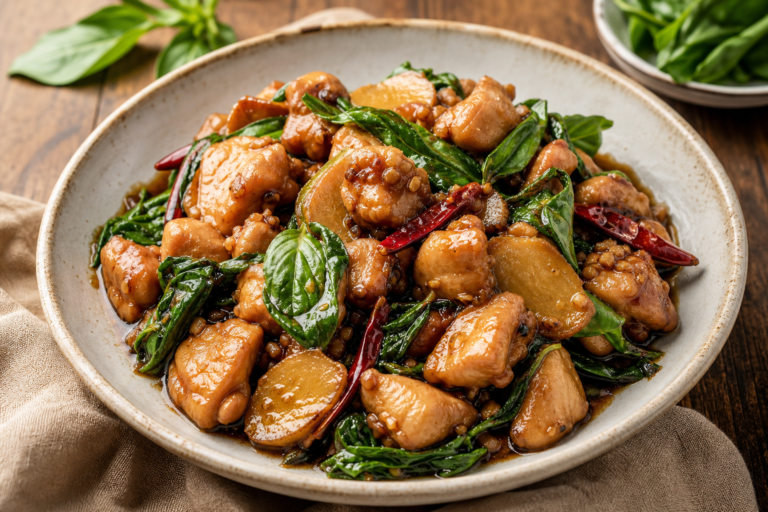
Taiwanese Three Cup Chicken
Ingredients
Instructions
- Mix the sauce ingredients in a small bowl (see recipe notes for composition) and set aside.
- Heat 1 1/2 tbsp plain oil in a non-stick pan over medium heat. Add the ginger slices and dried chillies and toast for about 30 seconds to flavor the oil—avoid letting the ginger brown.
- Turn the heat to high and add the chicken pieces. Toss for 2–3 minutes to seal the surface; the outside should change from pink to white but the interior will still be raw.
- Add the minced garlic and toss for about 30 seconds until fragrant.
- Pour in the prepared sauce and bring to a simmer. Reduce the heat to medium-high so the sauce simmers energetically (not a rolling boil).
- Simmer for 4–5 minutes, stirring occasionally, until the sauce reduces and becomes a thin syrup that coats the chicken. You should be briefly able to see the pan base when you drag a spatula through the sauce.
- Stir in the toasted sesame oil and the Thai basil leaves and cook for about 20 seconds, just until the basil wilts.
- Spoon the chicken and sauce over rice and serve immediately.
Estimated nutrition per serving
ESTIMATE unavailable: the supplied ingredient details are insufficient to calculate Calories, Protein, Carbohydrates, Fat and Fiber with reasonable accuracy for the stated yield.
Helpful Tips
- Use boneless thigh pieces for juicier chicken; bone-in is possible but will change cooking and eating timing.
- Toast ginger and dried chillies in the oil for about 30 seconds to scent the pan—avoid letting the ginger brown.
- After searing, add minced garlic for roughly 30 seconds to develop fragrance without burning.
- Keep the simmer energetic (not a rolling boil) and reduce for 4–5 minutes until the sauce becomes a thin syrup that coats the chicken; use the spatula test to check.
- If the sauce reduces too far and tightens, add a splash of water to loosen it back to a glossy consistency.
- If you don’t have Thai basil, regular basil or sliced green onion batons are suggested alternatives.
Frequently Asked Questions
Why do you toast the ginger at the start?
Toasting the ginger and dried chillies in the oil for about 30 seconds perfumes the cooking oil and builds background flavor without browning the ginger.
How do I know when the sauce is done?
When the sauce has reduced into a thin syrup that coats the chicken. Use the spatula test—drag a spatula through the sauce and you should briefly see the pan base.
What if my sauce gets too thick?
Add a splash of water to loosen the sauce back to a glossy, spoonable consistency.
Can I use bone-in chicken?
Yes, but the recipe notes bone-in pieces will change timing and are slower to eat compared with boneless thigh pieces.
Can I substitute the Thai basil?
The recipe suggests regular basil or sliced green onion batons as alternatives if Thai basil isn’t available.
Is there guidance for make-ahead or storage?
The supplied recipe does not include specific make-ahead or storage instructions.
You may also like
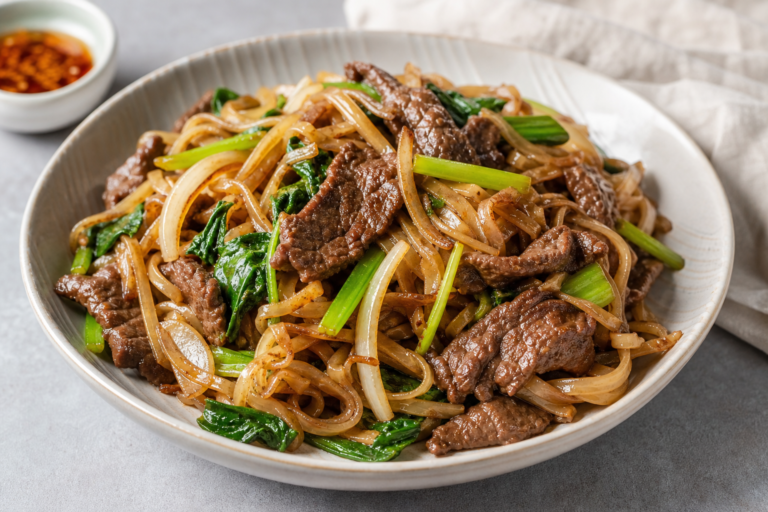
Beef Rice Noodles
A quick rice noodle stir fry featuring thinly sliced beef tenderised with baking soda, dried…
Read more →
Satay chicken legs with peanut sauce
Drumsticks coated in a satay-style marinade, oven-baked until golden and served with a thinner peanut…
Read more →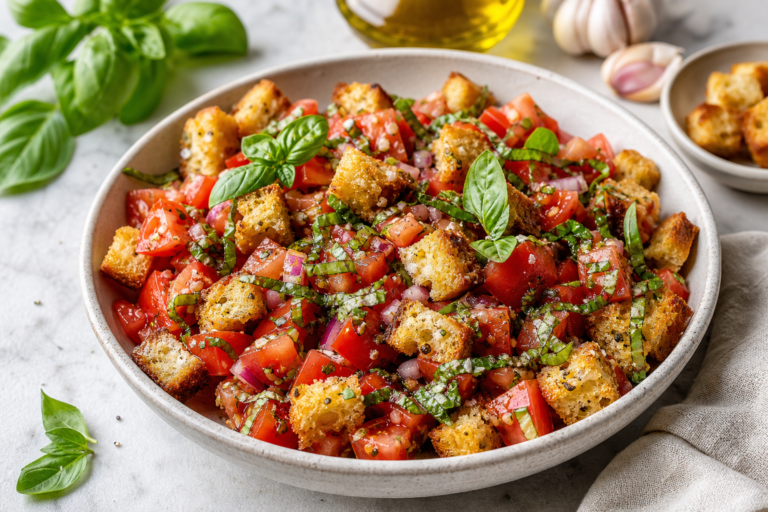
Bruschetta Salad
A quick, flavour-forward tomato salad topped with crispy garlic–parmesan croutons that soak up the juicy…
Read more →
One-pan Korean-style Beef Noodles
An easy one-pan noodle dinner with ground beef, gochujang, coconut milk and quick-cooking ramen. Finish…
Read more →This page may contain affiliate links. We may earn a commission at no extra cost to you.