
Panna Cotta
Classic Italian milk custard
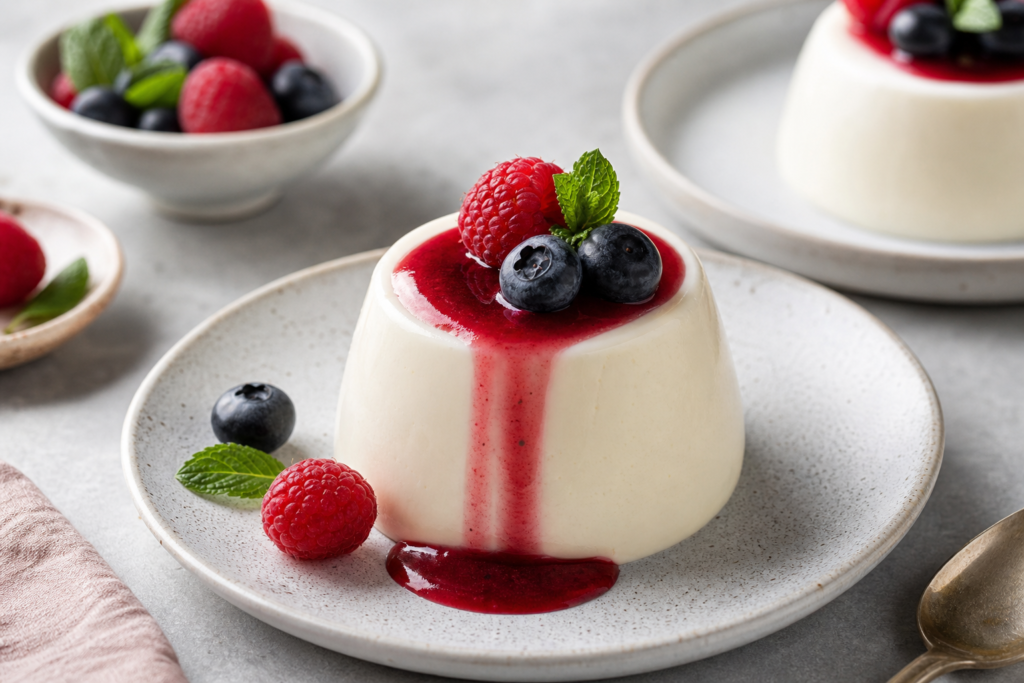
A simple, elegant chilled custard made from milk, cream, sugar, vanilla and gelatine. Minimal active work — about 10 minutes — and it can be prepared ahead and stored in the refrigerator for up to a week.
What you need
Five basic ingredients: milk, cream, sugar, gelatine powder and vanilla. Use full-fat, pourable milk and cream for best mouthfeel. Caster (superfine) sugar dissolves quickly; regular sugar will work but may take longer to dissolve.
Vanilla choices
Vanilla bean paste gives visible specks and good flavor; whole vanilla beans deliver the most intense flavor but require slicing and steeping; vanilla extract is a convenient alternative; imitation vanilla is artificial. If using a vanilla bean, steep the used pod longer (see instructions).
Moulds and serving
Six moulds about 2/3 cup (slightly larger than 1/2 cup) each make a good individual serving. Taller, narrower moulds look more impressive than wide, shallow ones. If you plan to unmould, leave minimal headroom between the panna cotta surface and the rim.
What Makes This Recipe Work
Panna cotta is essentially a delicate milk-and-cream custard held in shape by gelatine. The silky texture comes from the balance of full-fat, pourable milk and cream plus just enough sugar for sweetness without weighing down the milk proteins. Gelatine does the invisible heavy lifting: when properly bloomed and gently warmed it dissolves into the dairy, creating a custard that’s firm yet yielding.
Ingredient Notes
Keep the ingredient choices simple to preserve the fine texture. Full-fat, pourable milk and heavy (or thickened) cream give the best mouthfeel; lower-fat milks will make a noticeably lighter set. Caster (superfine) sugar disappears quickly into the warm milk—regular granulated sugar will work but might need more stirring to fully dissolve. For flavor, vanilla bean paste offers visible specks and dependable flavor; a whole vanilla bean gives the most intense, aromatic result but requires extra steeping time; pure vanilla extract is the convenient middle ground, while imitation vanilla is an artificial alternative.
How to Get the Best Result
Small technique details have an outsized effect on texture and presentation. First, properly bloom the gelatine: letting the powder swell in cold milk for the recommended five minutes ensures it fully hydrates. When you warm the bloomed gelatine, use a gentle medium-low heat and stop as soon as the gelatine has dissolved—avoid boiling because gelatine is sensitive to high temperatures (it melts at a low temperature, roughly 35°C/95°F). Overheating can reduce its setting power and change the mouthfeel.
After dissolving sugar and infusing vanilla, rest the warm mixture briefly to deepen the vanilla character; if you used a scraped vanilla bean, the used pod can be returned and steeped longer to boost aroma. Stirring cold cream into the warm milk mix before chilling helps bring the overall temperature down so the cream integrates without separating.
Chilling the combined mixture in a clear jug or bowl for an hour—stirring at about the 30- and 45-minute marks—lets it thicken to the consistency of heavy cream. This step helps suspend any vanilla seeds so they don’t simply sink to the bottom of the mould when poured. If a thin skin develops while it cools, strain it out before filling the moulds to keep the finished surface smooth.
Presentation and Serving Ideas
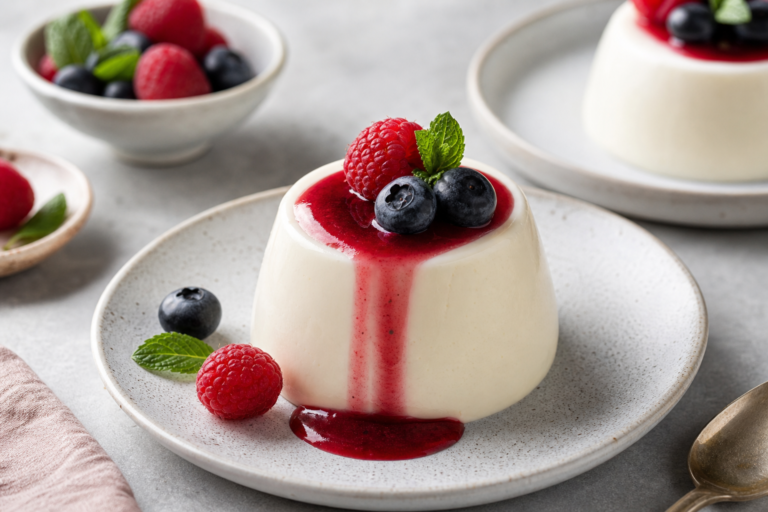
Taller, narrower moulds give a more elegant silhouette than wide, shallow ones; for individual portions, aim for moulds holding roughly two-thirds of a cup. If serving directly in glasses, the panna cotta need not be unmoulded and a shorter chill time is acceptable. Plain panna cotta is an excellent canvas—serve with a simple fruit compote, fresh berries, a drizzle of honey or caramel, or a spoonful of citrus curd to cut the richness. A single vanilla pod or a fresh berry makes a minimalist, elegant garnish.
Unmoulding Tips
If you plan to invert the panna cotta out of a mould, lightly oil the interior before pouring; wiping out excess keeps the surface oil-thin but prevents sticking, so you won’t need to dunk moulds in warm water later. Leave as little headroom as possible when filling so the panna cotta will release cleanly and look neat on the plate.
Storage and Make-Ahead
This dessert is ideal for preparing ahead: once set it will keep in the refrigerator for up to seven days. Allow plenty of time for a complete set—at least six hours is recommended for moulded panna cotta, and overnight is the safest option. If you are serving the panna cotta in glasses rather than unmoulding them, a shorter chill of about four hours is typically sufficient.
Troubleshooting Common Problems
Too soft or wobbly: the most common causes are not allowing enough chilling time or not fully dissolving the gelatine. Make sure the bloomed gelatine is fully melted on gentle heat and that the set time is long enough. If vanilla seeds sink: chill the mixture for an hour and stir as it thickens before pouring; this helps suspend the seeds. Lumps or a skin: strain the mixture before filling the moulds.
Final Notes
Active hands-on work is minimal—roughly ten minutes—so panna cotta is a reliable make-ahead dessert when you want something elegant with little last-minute effort. Small attentions—gentle heating, a brief rest to infuse vanilla, and careful chilling—are what transform the basic ingredients into a smooth, refined custard.
More recipe ideas
Panna Cotta
Ingredients
Instructions
- Lightly oil the moulds with a neutral-flavored oil and wipe with a paper towel; set aside. Oiling helps the panna cotta slip out if you plan to unmould.
- Bloom the gelatine: sprinkle the gelatine powder over 1/2 cup cold milk in a small saucepan, stir, and let sit for 5 minutes until swollen and lumpy.
- Warm the bloomed gelatine over medium-low heat just until the gelatine melts and the liquid is lump-free. Do not let the milk boil — gelatine melts at a low temperature (around 35°C/95°F).
- Add the sugar, vanilla and a pinch of salt, plus the remaining milk. Stir until the sugar has dissolved and the milk is warmed enough for dissolution, then remove the pan from the heat. Avoid boiling.
- Let the mixture rest for 10 minutes to draw out vanilla flavor. If using a vanilla bean, add the used pod and steep for 30 minutes instead of 10 minutes.
- Stir in the cold cream to bring down the temperature.
- Pour the mixture into a clear jug or bowl and refrigerate for 1 hour, stirring at the 30- and 45-minute marks and scraping the sides, until the mixture thickens to a consistency similar to heavy cream so any vanilla seeds remain suspended.
- Give the mixture a final stir, strain if there are any lumps or skin, then gently pour into the prepared moulds, minimizing headroom if you plan to invert them.
- Chill until set for at least 6 hours (overnight is safer). If serving in glasses rather than unmoulding, 4 hours is sufficient. Panna cotta will keep in the refrigerator for up to 7 days.
Estimated nutrition per serving
There isn't enough information to produce a reliable nutrition estimate because the recipe does not specify the total amounts of milk and cream used for the stated yield.
Helpful Tips
- Bloom the gelatine in cold milk for the recommended five minutes so it hydrates fully before warming.
- Warm the bloomed gelatine over medium-low heat and stop as soon as it melts—do not let the mixture boil (gelatine melts at relatively low temperatures, around 35°C/95°F).
- Chill the combined mixture in a clear jug or bowl for an hour, stirring at 30 and 45 minutes, to thicken it and keep vanilla seeds suspended.
- If using a whole vanilla bean, return the used pod to the warm mixture and steep for a longer time (about 30 minutes) to extract extra flavor.
- Lightly oil moulds and wipe out excess before pouring to make unmoulding easier and avoid heating the moulds in hot water.
- If a skin forms while cooling, strain the mixture before pouring to ensure a smooth surface.
Frequently Asked Questions
How long does the panna cotta need to chill before serving?
For moulded panna cotta allow at least six hours (overnight is safest). If serving in glasses rather than unmoulding, about four hours is usually sufficient.
Can I use a vanilla bean instead of extract?
Yes. A whole vanilla bean gives the most intense aroma but requires slicing and a longer steep (return the used pod to steep for about 30 minutes). Vanilla bean paste gives visible specks with reliable flavor; extract is a convenient alternative.
Why is the mixture chilled before pouring?
Chilling the mixture for an hour until it thickens helps keep vanilla seeds suspended and reduces the chance of milk and cream separating as it sets.
What’s the easiest way to unmould panna cotta?
Lightly oil the moulds before filling and leave minimal headroom. Oiling prevents sticking so you can invert the mould without needing to dunk it in warm water.
How long will panna cotta keep in the refrigerator?
Once set, panna cotta will keep in the refrigerator for up to seven days.
What should I do if the panna cotta is too soft?
Common causes are inadequate chilling time or improperly dissolved gelatine. Ensure the bloomed gelatine was fully melted on gentle heat and allow the recommended chilling time for a complete set.
You may also like
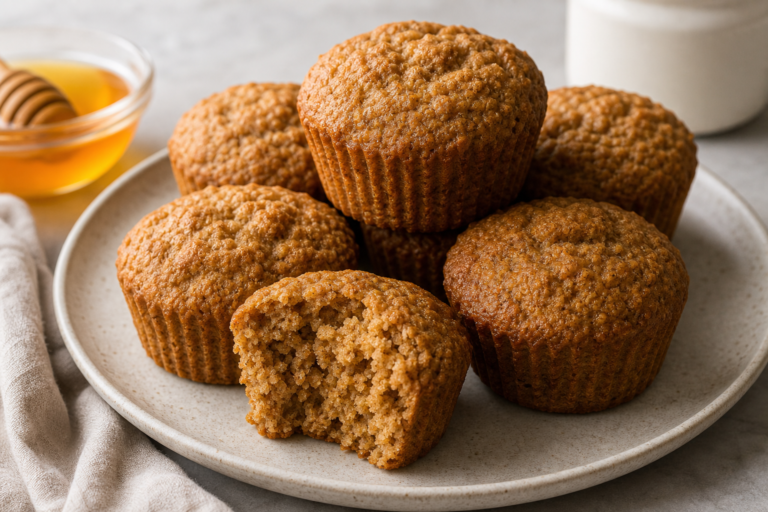
Up-and-go breakfast muffins!
Portable breakfast muffins made with wheat germ (or bran), wholemeal flour and fruit. Lightly sweetened…
Read more →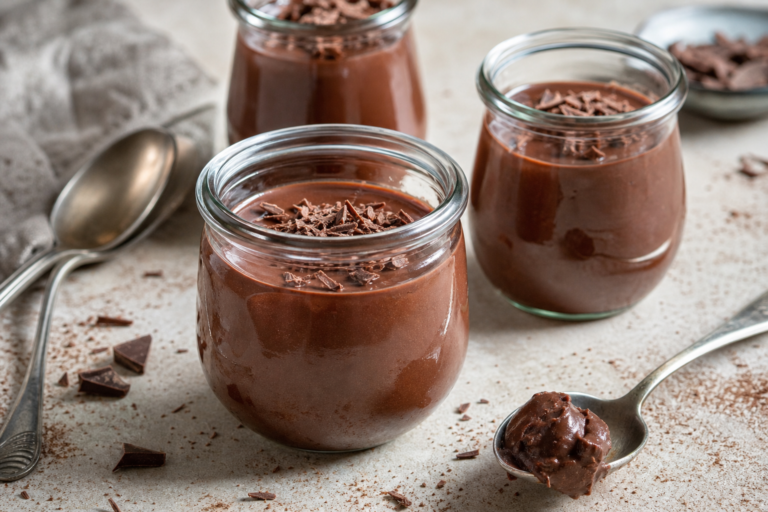
Chocolate Pudding Pots
A silky, chocolate pudding made with egg yolks and real chocolate. Whisk, heat briefly to…
Read more →
Monster Cookies!!
Crispy at the edges and chewy inside, these no-chill cookies combine peanut butter, rolled oats…
Read more →
Apple Pie Cobbler Bars
Shortbread-style crust and topping surrounding a soft, cinnamon-spiced apple filling—easy to make and great for…
Read more →This page may contain affiliate links. We may earn a commission at no extra cost to you.