
My go-to Chicken Breast recipe
Pan-seared chicken breasts with a quick white wine butter sauce — ready in 12 minutes using pantry staples.
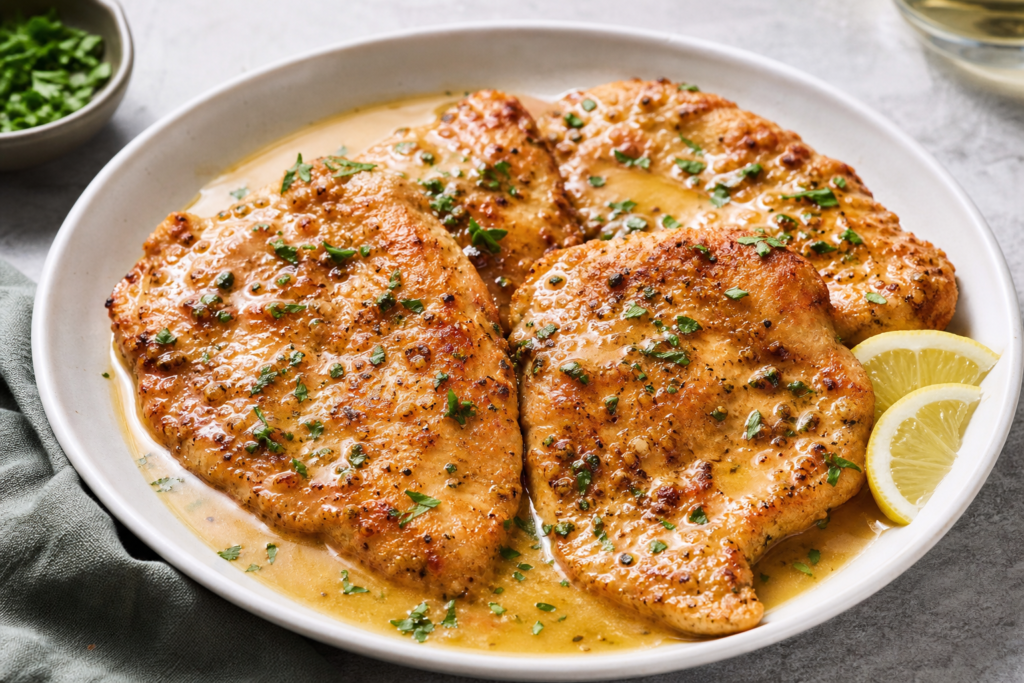
This fast pan-seared chicken uses a small dusting of seasoned flour so the exterior crisps up, then a simple butter sauce is made in the same pan to capture all the browned flavor. It’s a straightforward weeknight recipe that can be served with or without the sauce.
Portions and preparation
Use 2 large chicken breasts, each cut horizontally into 4 steaks (no pounding required) so the recipe yields 4 servings.
Substitutions and swaps
The fat for searing can be 20g/1 1/2 tbsp unsalted butter or 1 1/2 tbsp olive oil. The wine for the sauce can be replaced with low-sodium chicken stock or water. Plain/all-purpose flour can be swapped for a GF flour if needed.
Salt and seasoning notes
The seasoning mix includes 3/4 tsp cooking/kosher salt; halve that amount if using table salt or increase by about 50% if using flaky salt.
What Makes This Recipe Work
This chicken relies on two simple principles to turn ordinary breasts into something special: a light coating of seasoned flour for a crisp, golden exterior, and a quick pan sauce that captures the browned bits left in the skillet. The dusting of flour helps a crust develop without any pounding, and finishing the dish with a small amount of butter-based sauce amplifies the concentrated flavor from the pan in minutes.
Ingredient Notes
Use two large chicken breasts cut horizontally into four steaks so each piece cooks quickly and evenly. The seasoning blend in the recipe pairs paprika with onion and garlic powders and a touch of cumin (with suggestions for mild swaps), plus a modest amount of salt and pepper. For searing you can choose unsalted butter for richer flavor or olive oil if you prefer a higher smoke point. The sauce is made by deglazing the pan with a splash of dry white wine; if you want to skip alcohol, low-sodium chicken stock or plain water are direct substitutes. A final knob of butter stirred into the reduced liquid gives a smooth, glossy finish, and a spoonful of chopped parsley at the end brightens the result if you have it on hand. If you need this to be gluten free, swap the all-purpose flour for a gluten-free flour blend before seasoning the steaks.
How to Get the Best Result
Start by patting the chicken steaks dry so the seasoning-flour mix adheres and the surface browns rather than steams. Press the seasoning lightly onto both sides and shake off any excess—loose flour will burn and turn bitter. Heat the pan until the cooking fat is hot before adding the steaks so you get an immediate sear; aim for a deeply golden surface, or use the recipe’s internal temperature guidance of 67°C/153°F for doneness.
After the chicken is out of the pan, deglaze promptly with your chosen liquid and scrape the pan to lift the browned bits—this is where most of the sauce’s flavor lives. Let the liquid simmer until reduced by about half, then stir in the butter so it emulsifies into a silky sauce. For a restaurant-style finish, briefly return the chicken to the pan to coat each steak in sauce before plating.
Serving Ideas
This is an intentionally adaptable chicken: serve the steaks with the butter pan sauce spooned over and a scattering of chopped parsley. It pairs well with starchy sides that soak up sauce—think mashed or roasted potatoes, rice, or simple grains—alongside a green vegetable to balance the plate. Because the seasoning is straightforward, the cooked chicken also slices neatly for salads, sandwiches or grain bowls.
Storage & Make-Ahead
You can mix the seasoning ahead of time and keep it airtight until needed. Leftover cooked chicken and sauce will keep in the refrigerator; when reheating, warm gently and spoon sauce back over each portion to maintain moisture. If you need to omit the wine at the last minute, deglaze with low-sodium chicken stock or plain water instead—the recipe names both as direct swaps. For a gluten-free dinner, replace the all-purpose flour with a GF blend before seasoning the steaks.
Final Notes on Salt and Fat
The recipe’s salt amount is given for cooking/kosher salt. If you use table salt, halve the salt called for; if you use flaky finishing salt, increase the written amount by about 50% to reach comparable seasoning. Choosing butter for searing adds depth of flavor; olive oil gives a slightly cleaner sear and higher smoke tolerance.
More recipes to explore

More recipe ideas

My go-to Chicken Breast recipe
Ingredients
Instructions
- Make the seasoning: Combine paprika, onion powder, garlic powder, cumin, 3/4 tsp salt, 1/8 tsp pepper and 1 1/2 tbsp flour in a bowl. Sprinkle the mixture over both sides of each chicken steak, press gently with your fingertips to adhere and shake off any excess.
- Heat the pan: Place a large non-stick pan over high heat and add 20g/1 1/2 tbsp unsalted butter (or 1 1/2 tbsp olive oil).
- Sear the chicken: When the fat is hot, cook the chicken steaks for 2 1/2 minutes on the first side, then flip and cook 2 1/2 minutes on the second side until deeply golden. Alternatively, cook until the internal temperature reaches 67C/153F. Transfer the chicken to a plate.
- Make the pan sauce: Reduce then raise the heat to medium-high. Pour in 1/3 cup dry white wine and simmer rapidly for 1 to 1 1/2 minutes, scraping the pan with a spatula to loosen browned bits, until the liquid has reduced by about half. Add 30g/2 tbsp unsalted butter and stir until melted and combined.
- Serve: Return the chicken to the pan briefly if desired, then plate and spoon the butter sauce over the steaks. Sprinkle with 1 tbsp roughly chopped parsley and serve.
Estimated nutrition per serving
ESTIMATE based on two large chicken breasts (250–300 g each, midpoint used for calculation), 50 g total butter (20 g for searing + 30 g for sauce), 1.5 tbsp (≈12 g) all-purpose flour, and 1/3 cup dry white wine, divided into 4 servings. Actual values will vary with the exact weight of the chicken, choice of searing fat (butter vs. oil), any sauce left with servings, and precise ingredient weights.
Helpful Tips
- Pat the steaks very dry before seasoning so the flour sticks and the surface browns instead of steaming.
- Press the seasoned flour onto both sides and shake off excess to avoid burned flour in the pan.
- Heat the pan until the cooking fat is hot so the chicken gets an immediate sear and a deep golden crust.
- Scrape the pan while deglazing to lift browned bits—those are the main flavor source for the sauce.
- Reduce the deglazing liquid until about half the volume remains, then stir in butter to form a glossy sauce.
- If you skip the wine, use low-sodium chicken stock or plain water as a one-to-one substitute.
Frequently Asked Questions
Can I use oil instead of butter for searing?
Yes. The recipe lists 20 g butter or 1 1/2 tbsp olive oil for searing; butter gives richer flavor, olive oil provides a higher smoke point.
What can I use instead of white wine in the pan sauce?
Low-sodium chicken stock or plain water are direct, recommended swaps if you prefer not to use wine.
How do I make this gluten free?
Replace the all-purpose flour with a gluten-free flour blend before seasoning the chicken steaks.
How do I know when the chicken is done?
Cook until the exterior is deeply golden or until the internal temperature reaches 67°C/153°F, as given in the recipe.
Can I prepare parts of this recipe ahead of time?
Yes—mix the seasoning in advance and store it airtight. Cooked chicken and sauce can be refrigerated and should be reheated gently with sauce spooned over to retain moisture.
How should I adjust salt depending on the type I use?
The recipe amount is for cooking/kosher salt. If using table salt, halve it; for flaky finishing salt, increase by about 50% to reach similar seasoning.
You may also like
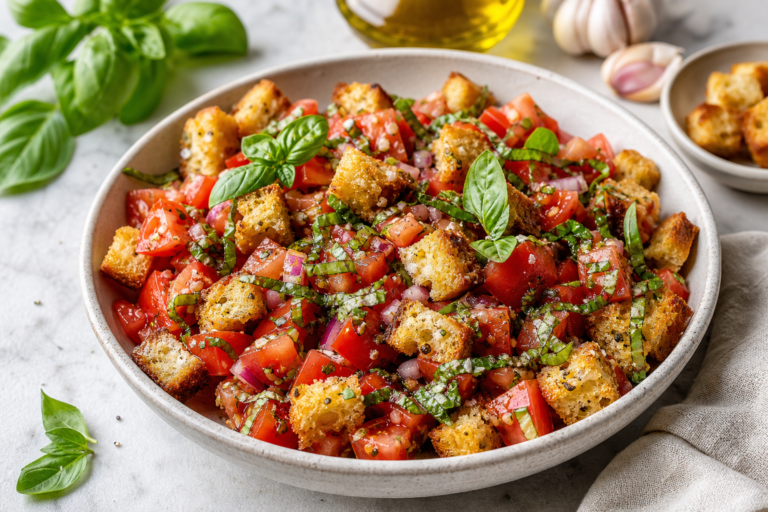
Bruschetta Salad
A quick, flavour-forward tomato salad topped with crispy garlic–parmesan croutons that soak up the juicy…
Read more →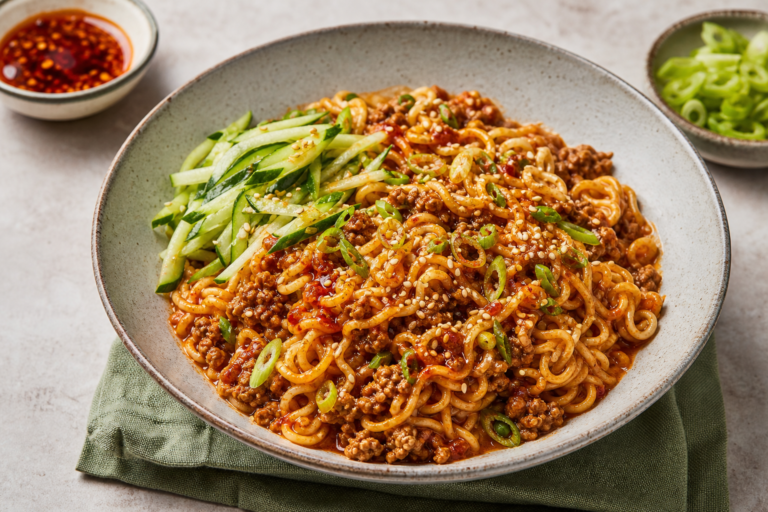
One-pan Korean-style Beef Noodles
An easy one-pan noodle dinner with ground beef, gochujang, coconut milk and quick-cooking ramen. Finish…
Read more →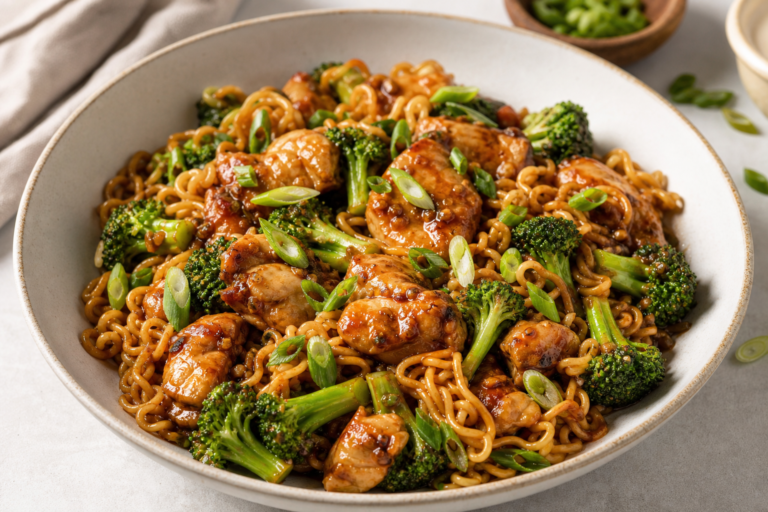
One-pan Chicken and Broccoli Ramen Noodles
A quick one-pan stir-fry where chicken, broccoli and instant ramen finish together in a glossy,…
Read more →
Air Fryer Sticky Pork Belly Bites
Pork belly rashers are trimmed, cut into bite-sized pieces, coated in a honey-and-hoisin marinade and…
Read more →This page may contain affiliate links. We may earn a commission at no extra cost to you.